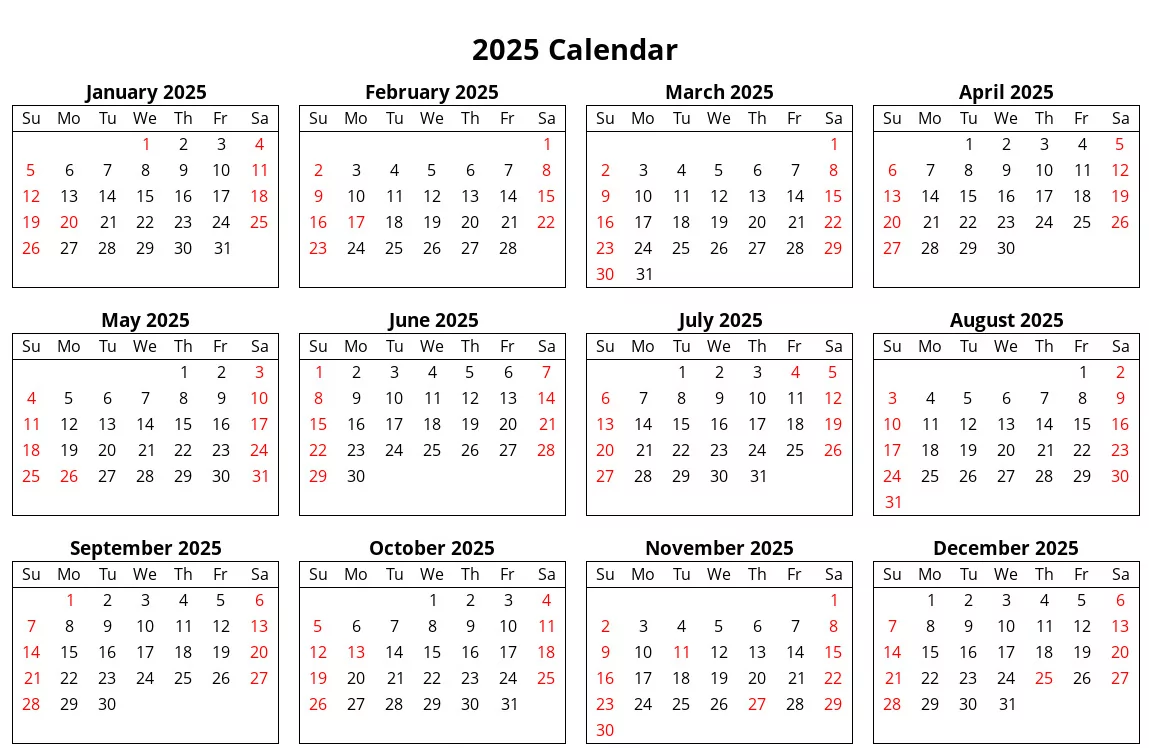
Visualizing an entire year at once provides strategic perspective impossible to achieve through monthly planning alone. A comprehensive 2025 yearly calendar at a glance enables strategic planning, identifies seasonal patterns, prevents scheduling conflicts, and facilitates long-term goal management. This ultimate guide presents complete 2025 calendar information, explores effective annual planning strategies, provides visual reference frameworks, and delivers practical tools for maximizing the year ahead.
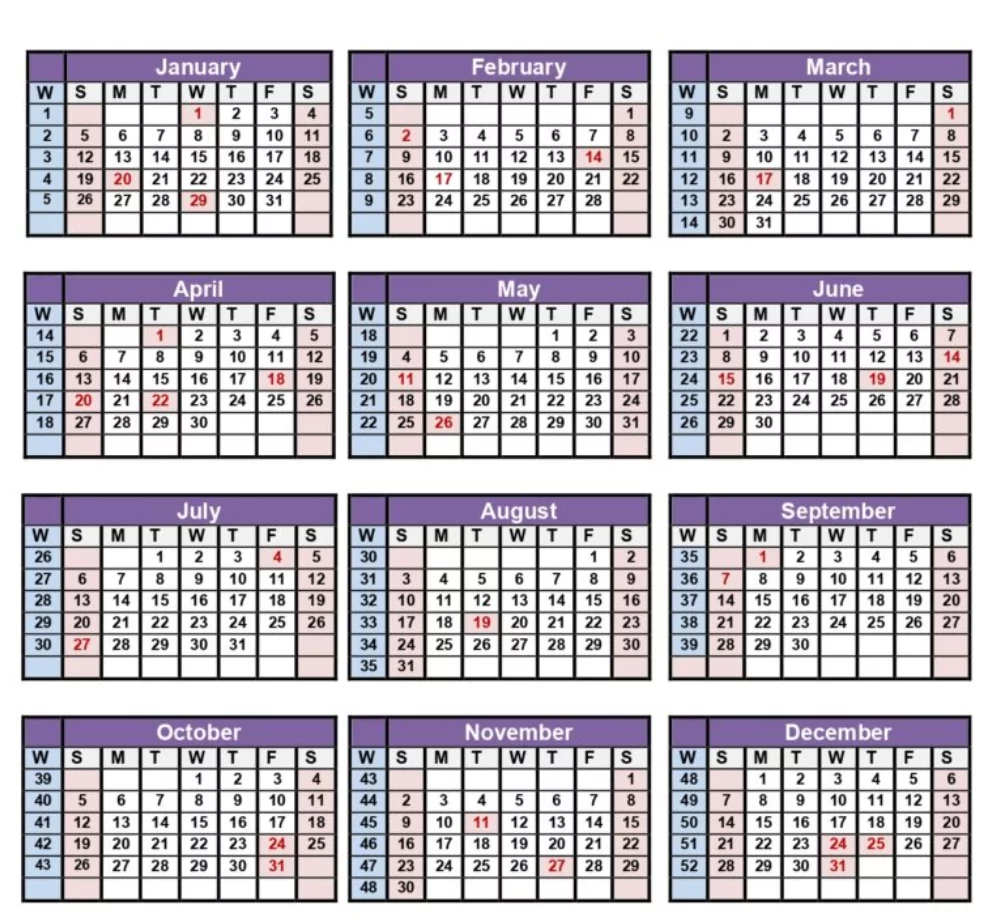
The Power of Annual Calendar Vision
Why Full-Year Views Matter
Looking at the entire year simultaneously offers advantages monthly planning cannot provide:
- Pattern recognition: Full-year perspective reveals seasonal patterns, busy periods, and natural planning windows
- Strategic allocation: Annual view enables distributing major projects, vacations, and goals across appropriate times
- Conflict prevention: Seeing entire year prevents scheduling conflicts across months and quarters
- Deadline management: Annual perspective helps establish realistic timelines and project sequencing
- Goal alignment: Year-long view connects daily activities to annual objectives and vision
- Financial planning: Full-year visibility supports budget allocation and expense forecasting
- Team coordination: Organizational-level annual calendars align diverse teams and departments
Different Uses of Full-Year Calendars
Depending on context and needs, annual calendars serve different purposes:
- Personal planning: Visualize personal goals, vacations, important dates throughout year
- Business planning: Strategic overview for resource allocation, project timelines, team coordination
- Educational: Academic calendars showing semesters, breaks, major dates
- Marketing: Campaign calendars showing promotional periods, content themes throughout year
- Project management: Gantt-style timelines showing project phases and milestones
- Event planning: Overview of all scheduled events throughout year
- Fitness/wellness: Year-long view of health goals, challenges, seasonal activities
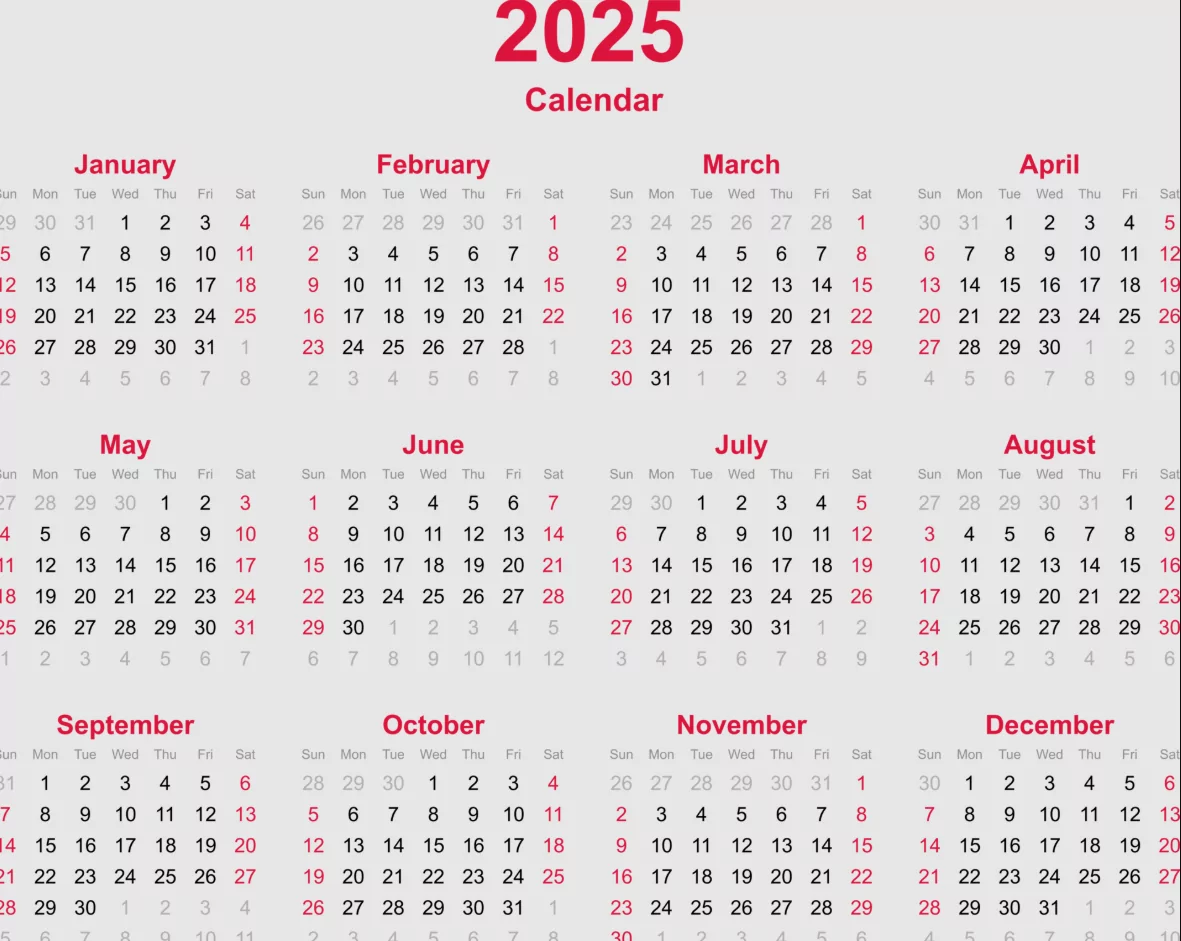
2025 Calendar Overview: Month-by-Month Snapshot
Q1 2025: January – March (New Beginnings)
Theme: Renewal and Fresh Starts
January 2025
- Days: 31
- Starts: Wednesday (January 1)
- Ends: Friday (January 31)
- Federal Holidays: New Year’s Day (1st), MLK Day (20th)
- Character: Cold, introspective; resolutions and goal-setting; winter continues
- Planning note: Ideal for annual goal establishment and strategic planning
February 2025
- Days: 28 (not leap year)
- Starts: Saturday (February 1)
- Ends: Friday (February 28)
- Federal Holidays: Presidents’ Day (17th)
- Character: Shortest month; winter deepens; romantic associations (Valentine’s Day 14th)
- Planning note: Good for completing Q1 projects before spring; pre-spring vacation planning
March 2025
- Days: 31
- Starts: Saturday (March 1)
- Ends: Monday (March 31)
- Federal Holidays: None
- Events: Spring Equinox (March 20); Daylight Saving Time begins (March 9)
- Character: Transitional month; spring arrives; longer daylight; renewal themes
- Planning note: Ideal for launching spring projects; outdoor activity planning; DST adjustment
Q1 Summary: Three months, 90 days. Productive quarter for planning, goal-setting, and project initiation. Winter conditions continue through March. Major federal holidays provide extended weekends in January and February. Spring transition beginning March.
Q2 2025: April – June (Growth and Expansion)
Theme: Growth, Energy, and Outdoor Activity
April 2025
- Days: 30
- Starts: Tuesday (April 1)
- Ends: Wednesday (April 30)
- Federal Holidays: None
- Events: Easter (April 20)
- Character: Spring in full bloom; moderate temperatures; renewal energy; Earth Day (April 22)
- Planning note: Ideal for outdoor projects; spring cleaning; environmental initiatives
May 2025
- Days: 31
- Starts: Thursday (May 1)
- Ends: Saturday (May 31)
- Federal Holidays: Memorial Day (26th, Monday)
- Events: Mother’s Day (May 11)
- Character: Warm, pleasant weather; garden activity peak; summer approaching; memorial observances
- Planning note: Extended Memorial Day weekend (May 23-26); ideal for vacation planning; outdoor recreation
June 2025
- Days: 30
- Starts: Sunday (June 1)
- Ends: Monday (June 30)
- Federal Holidays: Juneteenth (June 19, Thursday)
- Events: Summer Solstice (June 20); Father’s Day (June 15)
- Character: Warmest month in Northern Hemisphere; maximum daylight; summer begins officially
- Planning note: Summer vacation season begins; school year ends; outdoor activity peaks
Q2 Summary: Three months, 91 days. Spring and early summer. Weather improves significantly. Memorial Day extended weekend enables travel. Juneteenth observance mid-month. Summer vacation season begins. Perfect for outdoor projects, garden activity, and vacation planning.
Q3 2025: July – September (Abundance and Transition)
Theme: Summer Peak and Autumn Transition
July 2025
- Days: 31
- Starts: Tuesday (July 1)
- Ends: Thursday (July 31)
- Federal Holidays: Independence Day (July 4, Friday)
- Character: Peak summer heat; vacation season; patriotic celebrations; extended July 4 weekend
- Planning note: Independence Day weekend (July 4-6); ideal for family vacation; beach/lake activity; outdoor celebrations
August 2025
- Days: 31
- Starts: Friday (August 1)
- Ends: Sunday (August 31)
- Federal Holidays: None
- Character: Summer continues; vacation season ongoing; back-to-school preparation begins; summer camps conclude
- Planning note: Late summer vacation window; school supply shopping; preparation for fall schedules
September 2025
- Days: 30
- Starts: Monday (September 1)
- Ends: Tuesday (September 30)
- Federal Holidays: Labor Day (September 1, Monday)
- Events: Fall Equinox (September 22)
- Character: Summer ends; fall begins; school year starts; seasonal transition; harvest approaches
- Planning note: Labor Day extended weekend (August 29-September 1); school year begins; fall project planning
Q3 Summary: Three months, 92 days. Peak summer through late August. Independence Day weekend mid-July. Labor Day extended weekend begins September. Fall season officially begins late month. Back-to-school transition. Vacation season winds down.
Q4 2025: October – December (Harvest, Reflection, and Celebration)
Theme: Gratitude, Reflection, and Holiday Season
October 2025
- Days: 31
- Starts: Wednesday (October 1)
- Ends: Friday (October 31)
- Federal Holidays: Columbus Day (October 13, Monday)
- Character: Fall foliage peak; cooler temperatures; harvest season; Halloween (October 31)
- Planning note: Columbus Day (mid-month, partial closure); fall festival season; holiday planning begins
November 2025
- Days: 30
- Starts: Saturday (November 1)
- Ends: Sunday (November 30)
- Federal Holidays: Veterans Day (November 11, Tuesday); Thanksgiving Day (November 27, Thursday)
- Character: Fall deepens; holiday season begins; gratitude emphasis; Thanksgiving week major family gathering period
- Planning note: Extended Thanksgiving weekend (November 27-December 1); Black Friday shopping; holiday shopping season begins
December 2025
- Days: 31
- Starts: Monday (December 1)
- Ends: Wednesday (December 31)
- Federal Holidays: Christmas Day (December 25, Thursday)
- Events: Winter Solstice (December 21)
- Character: Winter begins; holiday season peak; celebrations; year-end reflection; New Year anticipation
- Planning note: Extended Christmas period (December 25-January 1 crossing into 2026); year-end closure; planning for 2026 begins
Q4 Summary: Three months, 91 days. Fall deepens through November. Veterans Day mid-November. Extended Thanksgiving weekend (November 27-December 1). Holiday season intensifies. Christmas through New Year extended closure. Year-end reflection period. Planning for next year begins.
2025 Annual Calendar Statistics and Patterns
Year Overview
- Total days in 2025: 365 days (not a leap year)
- Total weeks: 52 weeks + 1 day
- First day: Wednesday (January 1)
- Last day: Wednesday (December 31)
- Federal holidays: 11 observances (10 permanent + Juneteenth)
Monthly Breakdown
| Month | Days | Starts | Ends | Holidays |
| January | 31 | Wednesday | Friday | 2 (New Year’s, MLK) |
| February | 28 | Saturday | Friday | 1 (Presidents’) |
| March | 31 | Saturday | Monday | 0 (Equinox) |
| April | 30 | Tuesday | Wednesday | 0 (Easter) |
| May | 31 | Thursday | Saturday | 1 (Memorial) |
| June | 30 | Sunday | Monday | 1 (Juneteenth) |
| July | 31 | Tuesday | Thursday | 1 (Independence) |
| August | 31 | Friday | Sunday | 0 |
| September | 30 | Monday | Tuesday | 1 (Labor) |
| October | 31 | Wednesday | Friday | 1 (Columbus) |
| November | 30 | Saturday | Sunday | 2 (Veterans, Thanksgiving) |
| December | 31 | Monday | Wednesday | 1 (Christmas) |
Seasonal Distribution
- Winter (Dec 2024-Feb 2025): 90 days; cold season; New Year emphasis; indoor focus
- Spring (Mar-May 2025): 92 days; warming trend; outdoor activity increase; renewal energy
- Summer (Jun-Aug 2025): 92 days; warmest season; vacation peak; outdoor recreation
- Fall (Sep-Nov 2025): 91 days; cooling trend; harvest season; holiday preparation; year-end reflection
Extended Weekends and Holiday Patterns
Long Weekend Analysis:
- Presidents’ Day Weekend: February 14-17 (Friday-Monday) = 4 days
- Memorial Day Weekend: May 23-26 (Friday-Monday) = 4 days
- Independence Day Weekend: July 4-6 (Friday-Sunday) = 3 days
- Labor Day Weekend: August 29-September 1 (Friday-Monday) = 4 days
- Thanksgiving Period: November 27-December 1 (Thursday-Monday) = 5 days (extended with weekend)
- Christmas/New Year: December 25, 2025-January 1, 2026 (Thursday-Thursday) = Extended closure
Busiest Business Periods
- January-February: New year projects; goal implementations; budget allocation
- March-April: Spring project launches; Q1 reporting; summer planning
- May-June: Summer planning; vacation season onset; school year transitions
- July-August: Vacation season; summer operations; reduced staffing common
- September-October: Fall season transition; Q4 planning; back-to-school impacts
- November-December: Holiday season rush; year-end closures; retail peak
Strategic 2025 Annual Planning Framework
Quarterly Planning Structure
Q1 (Jan-Mar): Foundation and Planning
- Strategic focus: Goal-setting, planning, foundation-building
- Business focus: Annual budgets, team planning, project initiation
- Personal focus: New Year resolutions, goal establishment, habit formation
- Key activities: Planning sessions, strategy development, resource allocation
Q2 (Apr-Jun): Growth and Expansion
- Strategic focus: Project execution, growth activities, outdoor initiatives
- Business focus: Q1 results review, mid-year adjustments, summer planning
- Personal focus: Goal progress, outdoor activities, vacation planning
- Key activities: Project execution, team expansion, capacity building
Q3 (Jul-Sep): Abundance and Adjustment
- Strategic focus: Peak season management, transitions, fall preparation
- Business focus: Summer operations management, fall planning, back-to-school impacts
- Personal focus: Summer enjoyment, back-to-school preparation, fall project planning
- Key activities: Peak season management, transition planning, Q4 strategizing
Q4 (Oct-Dec): Harvest and Reflection
- Strategic focus: Year results, reflection, gratitude, next-year planning
- Business focus: Year-end closing, annual reporting, 2026 strategy
- Personal focus: Year reflection, gratitude, holiday celebrations, new year planning
- Key activities: Year-end review, closing procedures, 2026 planning
Annual Goals and Milestones Framework
Establish framework connecting annual goals to calendar structure:
- January: Define annual goals (3-5 major objectives)
- March: Assess Q1 progress, adjust as needed
- June: Mid-year review and major adjustments
- September: Assess progress, plan final quarter push
- December: Comprehensive year review, celebrate achievements, plan 2026
Visual Calendar Formats for Annual Planning
Format 1: Full-Year Wall Calendar
Description: Large poster (18×24″ or larger) displaying all 12 months visible simultaneously
Best For: Strategic planning, family/organizational visibility, goal tracking
Information Included:
- All months in grid format
- Federal holidays highlighted
- Space for notes or goal tracking
- Color-coding by season or category possible
Format 2: Year-at-Glance Compact Calendar
Description: Single-page calendar with all 12 months in small grids
Best For: Printable reference, pocket reference, document inclusion
Information Included:
- 12 mini monthly grids
- Key dates and holidays marked
- Space-efficient design
Format 3: Quarterly Planning Calendar
Description: Quarterly calendars (4 pages for 4 quarters)
Best For: Business planning, detailed quarterly strategy
Information Included:
- 13-week view per quarter
- Detailed daily boxes for notes
- Holiday and key date marking
- Quarterly goal space
Format 4: Goal-Tracking Annual Calendar
Description: Calendar designed specifically for annual goal tracking
Best For: Goal achievement, progress monitoring, motivation
Information Included:
- Annual goals clearly stated
- Monthly milestone checkpoints
- Progress tracking spaces
- Reflection prompts
Format 5: Business/Project Timeline Calendar
Description: Gantt-style calendar showing project phases and timelines
Best For: Project management, team coordination, deadline tracking
Information Included:
- Project phases visualized across year
- Key milestones and deadlines
- Team assignments possible
- Resource allocation visibility
Creating Your 2025 Annual Plan
Step 1: Visualize the Full Year (January Planning)
Print or display full-year calendar prominently. Spend time studying it:
- Notice seasonal patterns and weather changes
- Identify busiest and slowest periods
- Observe holiday patterns and extended weekends
- Recognize natural planning windows
Step 2: Identify Annual Goals and Priorities
Define 3-5 major annual goals:
- Personal/professional development goals
- Projects requiring extended timelines
- Significant life events or milestones
- Organizational or business objectives
Step 3: Map Goals to Calendar
Distribute goals and key milestones across year:
- Establish quarterly milestone checkpoints
- Identify preparation phases and execution phases
- Account for seasonal advantages and constraints
- Avoid overloading any single period
Step 4: Plan Key Activities and Deadlines
Mark major dates and deadlines on calendar:
- Project deadlines and deliverables
- Vacation and important personal dates
- Training or educational activities
- Maintenance or renewal deadlines
Step 5: Establish Review Checkpoints
Schedule regular progress reviews:
- Monthly reviews (last Friday of each month)
- Quarterly reviews (end of each quarter)
- Semi-annual major review (June)
- Year-end comprehensive review (December)
Tools and Resources for Annual Planning
Digital Tools
- Google Calendar: Create master calendar with all goals and milestones; share with team
- Asana, Monday.com: Project management tools showing year-long timelines
- Excel/Google Sheets: Create custom annual planning spreadsheets
- Notion: Database-style annual planning with flexible organization
Printable Resources
- Calendarlabs.com: Free printable year-at-a-glance calendars
- Vertex42.com: Excel annual calendars with customization
- Canva: Design custom annual planning calendars
- Microsoft Office: Built-in annual calendar templates
Physical Planning Tools
- Large wall calendar: Display prominently for constant visibility
- Desk calendar: Monthly or quarterly desk reference
- Planner/journal: Written planning and reflection
- Goal-tracking notebook: Dedicated space for annual goal management
Seasonal Considerations for 2025
Winter (Through March)
- Shorter daylight hours (until March 20)
- Cold temperatures in Northern Hemisphere
- Holiday season carries over from 2024
- Ideal for indoor projects, planning, strategy
- New Year energy enables goal-setting
Spring (April-May)
- Lengthening daylight; increasing warmth
- Outdoor activity increases significantly
- Spring equinox marks renewal
- Garden and outdoor projects feasible
- Memorial Day extended weekend enables travel
Summer (June-August)
- Maximum daylight (longest day June 20)
- Peak warmth and summer weather
- Vacation season; travel peaks
- Outdoor recreation at maximum
- Productivity may decrease due to vacations
Fall (September-November)
- Decreasing daylight (shortest day December 21)
- Cooling temperatures; foliage changes
- Back-to-school transitions
- Harvest season themes
- Holiday season preparation and celebration
- Year-end reflection period
Common 2025 Planning Challenges and Solutions
Challenge 1: Too Many Holidays Disrupting Business
Solution: Plan backward from holidays—schedule project deadlines before holidays, restart after holidays.
Challenge 2: Overestimating Productive Days
Solution: Account for realistic work days—subtract holidays, vacation, meetings, actual tasks complete per day.
Challenge 3: Seasonal Productivity Fluctuations
Solution: Schedule intense projects during high-productivity seasons; defer complex work from vacation seasons.
Challenge 4: Goal Abandonment Mid-Year
Solution: Establish quarterly checkpoints; adjust goals rather than abandoning them; celebrate partial progress.
Challenge 5: Maintaining Annual Perspective
Solution: Display full-year calendar prominently; monthly calendar reviews; quarterly planning sessions.
Maximizing 2025: Year-End Reflection Framework
Annual Review Process (December)
As 2025 closes, comprehensive reflection optimizes future planning:
- Goal Achievement Review: How many annual goals were achieved? Partially completed?
- Lessons Learned: What worked well? What didn’t? What surprised you?
- Pattern Analysis: What patterns emerged throughout 2025?
- Productivity Analysis: When were you most/least productive? Why?
- Financial Review: How accurate were 2025 budget forecasts?
- Gratitude Reflection: What are you grateful for from 2025?
- 2026 Visioning: What do you want 2026 to look like?
Conclusion: Strategic Vision Starts with Annual Perspective
The 2025 yearly calendar at a glance provides strategic foundation for effective planning, realistic goal-setting, and intentional living. By visualizing the complete year, understanding seasonal patterns, recognizing holiday impacts, and strategically allocating goals and projects, you transform abstract annual aspirations into concrete, achievable plans.
Begin your 2025 planning by printing or displaying a full-year calendar. Study it thoughtfully, noticing seasonal patterns and natural planning windows. Establish 3-5 major annual goals. Distribute milestones across quarters, accounting for seasonal advantages. Identify key dates and deadlines. Schedule quarterly review checkpoints. Then execute systematically, adjusting as circumstances evolve.
Throughout 2025, return to your annual calendar regularly—not as rigid constraint but as strategic guide enabling flexibility within framework. Monthly reviews, quarterly assessments, and year-end reflection ensure your full-year perspective stays relevant and supportive of meaningful progress.
Your 2025 awaits. With comprehensive annual calendar perspective, strategic quarterly planning, and intentional execution, 2025 can become your most intentional, productive, and satisfying year yet.